Contact Us
Head Office: House Number 121, Sector 8A, Sector 8, Chandigarh, Haryana 160009
Contact No: +91-9814279771, +91-9814279995
© 2026 Afflatus. All rights reserved



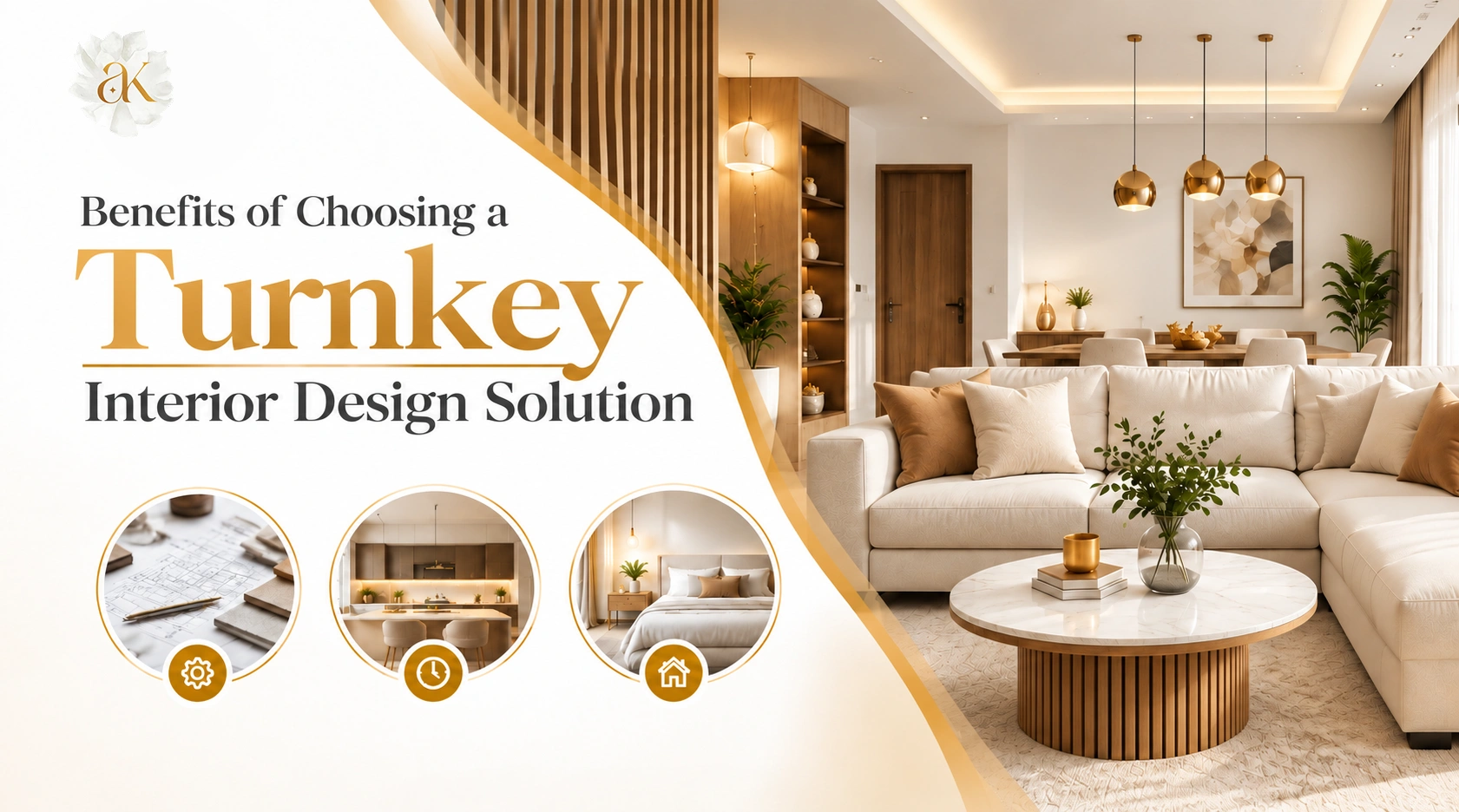
Planning an interior project becomes difficult when several vendors handle different parts of the work. You may coordinate designers, contractors, carpenters and material suppliers separately.
A turnkey interior design solution brings these responsibilities under one professional team. You get coordinated support from concept development to final handover. This approach can save time, simplify communication and improve design consistency.
You also gain better control over materials, execution and project decisions. For residential design, the Bureau of Energy Efficiency guidance highlights the importance of daylight, ventilation and building performance. Here is how turnkey design can make your interior project easier to manage.
Turnkey interior design provides an end-to-end service from the initial concept to final project handover. One interior design team coordinates the major stages instead of making you manage separate vendors.
A turnkey interior project can include:
This creates a direct relationship between interior design, space planning, procurement, project management and execution. Your designer can carry the approved design concept through each stage.
The exact scope depends on your project agreement. Always check the inclusions, exclusions, materials, payment milestones and expected timeline before work begins.
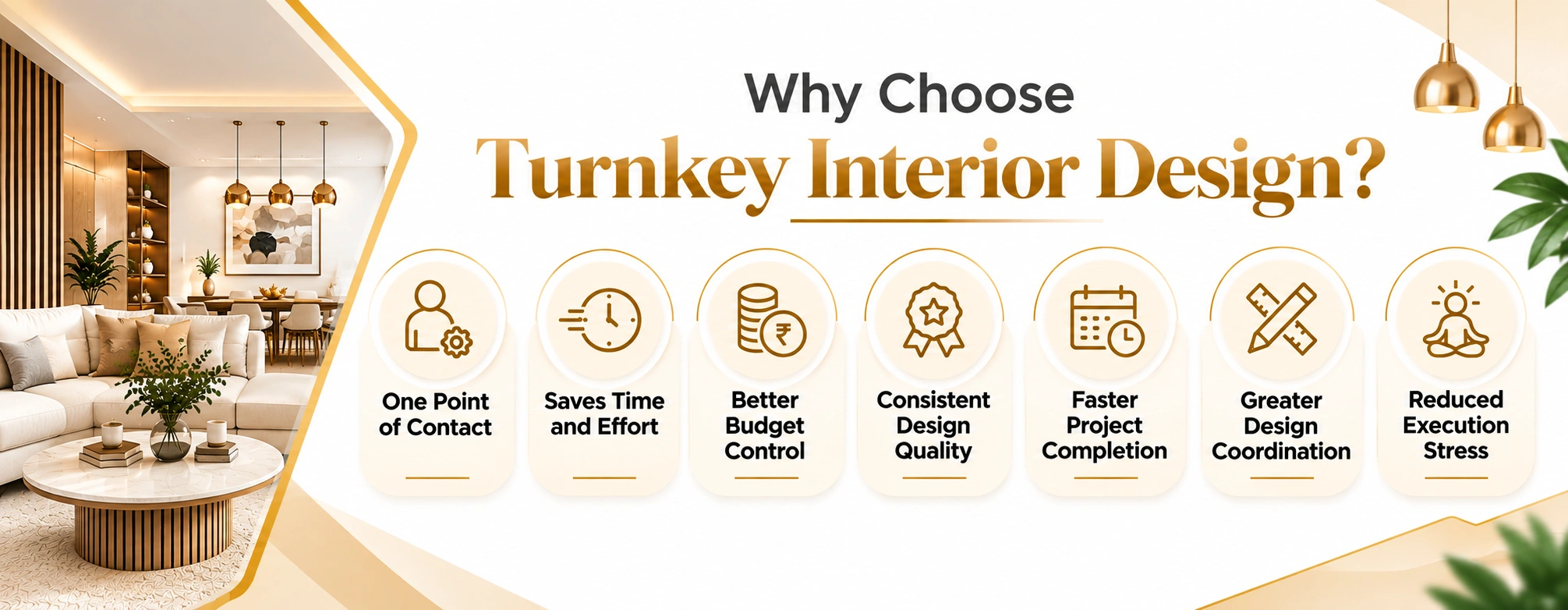
The main benefit of turnkey interior design comes from centralised project management. One coordinated team can connect design decisions with procurement, execution and finishing.
An interior designer can give you one primary point of contact for the project, reducing the need to coordinate every requirement with separate professionals. You do not need to coordinate every requirement with separate professionals.
The design team can manage carpenters, electricians, painters, fabricators and material suppliers according to the project schedule. You can therefore communicate major requirements through one organised channel.
This structure becomes useful when several activities happen simultaneously. It reduces the confusion that often comes from managing independent vendors.
Interior projects require regular follow-ups, site checks and procurement decisions. A turnkey team handles many of these operational responsibilities for you.
The team can coordinate material procurement, site supervision, contractor scheduling and execution. You can stay involved in important design decisions without managing every daily task.
This advantage suits busy homeowners and business owners particularly well. You can monitor major milestones instead of spending every day managing the project.
A turnkey project can give you clearer financial visibility before execution starts. Your quotation can outline major requirements, materials, furniture and execution costs.
You can also finalise material specifications before procurement begins. This makes it easier to compare choices against your available budget.
However, turnkey design does not automatically eliminate additional costs. Design changes, upgraded materials and unexpected site conditions can change the final amount.
Before signing, review:
A detailed agreement gives you a stronger reference for managing project expenses.
A unified design and execution team can maintain the intended visual direction throughout your property. This matters when multiple materials, furniture pieces and finishes must work together.
Your space planning, colour palette, lighting, furniture and paint for interior walls should support the same design language. Centralised decisions make that consistency easier to achieve. Centralised decisions make that consistency easier to achieve.
Quality also depends on execution. Regular site supervision allows the team to identify workmanship or finishing concerns during the project.
Turnkey interiors can reduce delays caused by disconnected vendor schedules. One team can coordinate different activities according to the project's execution sequence.
For example, electrical work should align with carpentry and surface finishing. Furniture installation should also follow accurate measurements and site readiness.
A coordinated schedule helps different trades work in the correct order. Your actual timeline still depends on project size, material availability and site conditions.
Good interior design requires more than attractive individual elements. Furniture, lighting, materials and layouts should work together within the available space.
A turnkey designer can coordinate with architects and connect architecture, interior design, furniture, lighting, materials and styling from the planning stage.
This becomes especially valuable when you want custom furniture. The designer can account for its dimensions, function and finish before execution begins.
Managing an interior project independently creates many small responsibilities. You may need to track deliveries, measurements, workmanship, contractors and site progress.
Turnkey execution places much of this coordination with the professional team. You can focus on approvals, preferences and important project decisions.
The approach does not remove your involvement. Instead, it gives you a more structured role while the team manages interconnected execution tasks.
Turnkey interior design suits clients who want one coordinated team for design and execution. It works especially well when a project involves multiple specialists and detailed implementation.
You may benefit from this approach if you:
It can also suit larger properties where different trades require close coordination. Your budget, project scope and desired involvement should guide the final choice.
Turnkey planning can also support practical design decisions. The Bureau of Energy Efficiency states that residential buildings use about 70% of building-sector electricity. This figure comes from FY 2021–22 data.
Therefore, residential design can consider daylight, ventilation and energy-conscious planning. BEE's Eco Niwas Samhita addresses heat gain, heat loss, natural ventilation and daylighting potential.
Choosing the right interior designer matters because turnkey projects combine creative planning with practical execution. You need a team that understands your vision and can carry it through completion.
Aradhana Kakar Designs provides bespoke interior and architectural solutions across Chandigarh, Mohali, Panchkula and Ludhiana. The studio offers residential, commercial, renovation and turnkey design services.
Its turnkey approach connects consultation, space understanding, concept development, material selection, execution and final styling. This creates a connected design journey instead of treating each project stage separately.
The studio also brings extensive professional experience to its design work. Aradhana Kakar has worked across luxury homes, corporate offices, resorts, hotels and turnkey projects.
If you want a cohesive interior without managing every vendor yourself, turnkey design can simplify the process. Contact Aradhana Kakar Designs to discuss your project and explore a personalised turnkey interior design solution.
Bring your dream space to life with Aradhana Kakar Designs, where architecture, interior design, furniture, decor, renovations, and turnkey solutions come together to create spaces that truly feel like you.
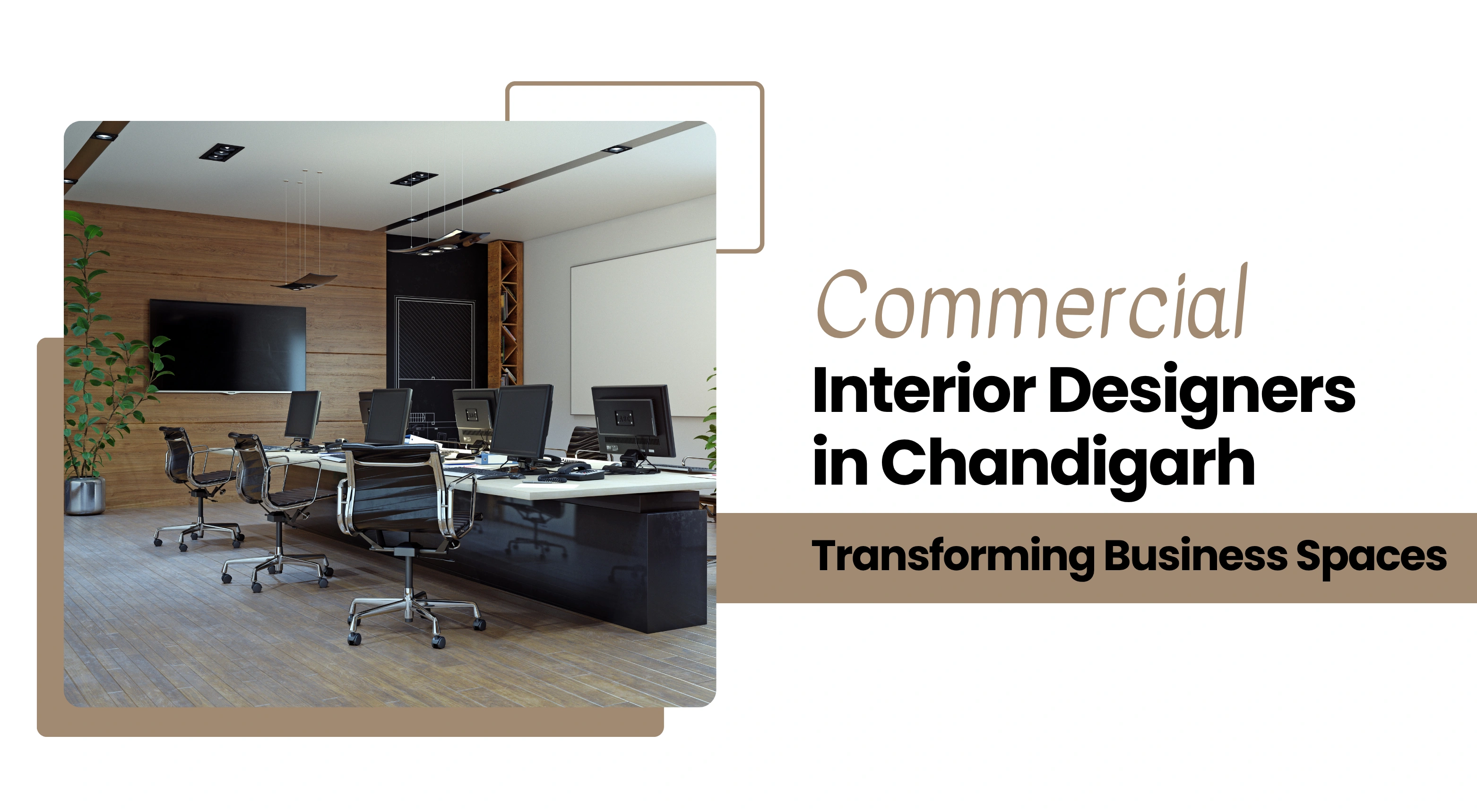
Hire a top commercial interior designer in Chandigarh to create a stylish, functional office or shop. Perfect for new setups or renovations.
Read More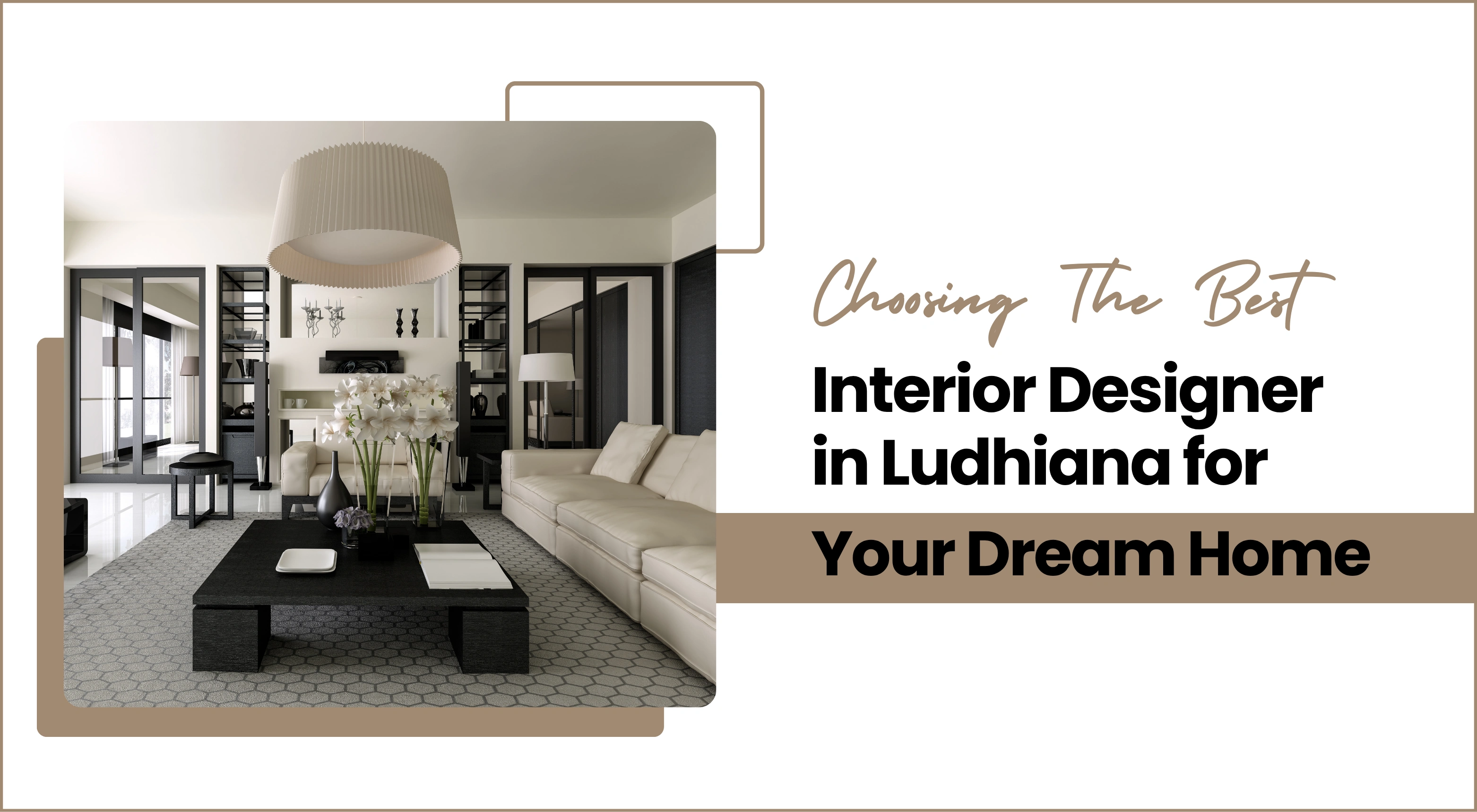
Read more about personalized interior design in Ludhiana with Aradhana Kakar Designs—expert guidance, smart styling, and seamless home transformation.
Read More.webp)
Explore the top 8 interior design tips to make a small room look spacious. Learn how smart layouts, lighting, and furniture choices can open up your space.
Read More